SILENCED:
fashion’s compliance
failing workers
Workers say they’re being underpaid. The audits say everything is fine. Our latest report explores who is telling the truth.

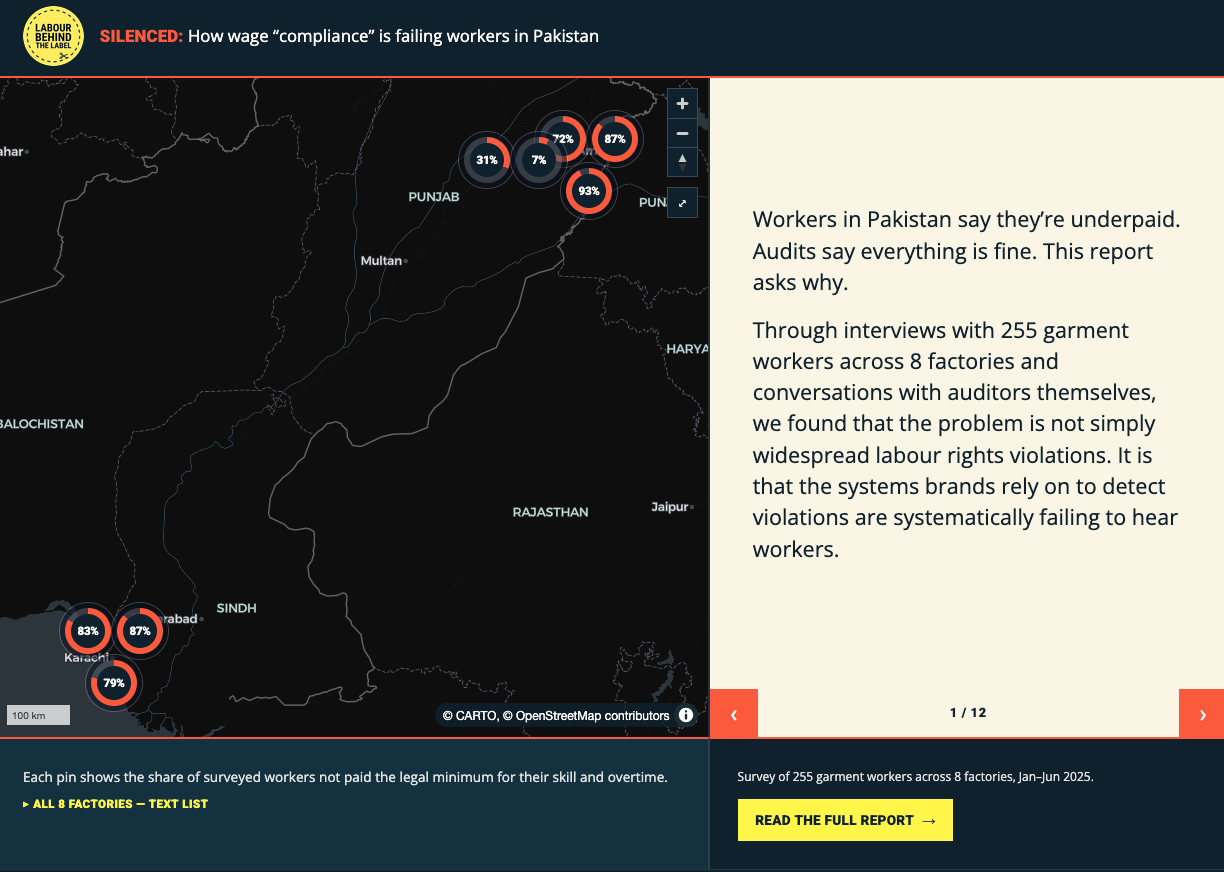
Research into Pakistan’s garment industry reveals why these two stories don’t match. We spoke to 255 workers across eight garment factories and, crucially, we also interviewed the auditors themselves. What we found should concern every fashion brand.
Nearly two-thirds of workers were being paid less than the legal minimum they were entitled to once overtime and skill levels were taken into account. 71% couldn’t afford their basic household needs. Only three workers out of 255 earned anywhere near a living wage.
Workers spoke about how they were afraid to speak out due to seeing any worker who did raise a concern lose their job. One worker producing for Zara said: “We all know, if you file a complaint you will be terminated”. Another said about asking for leave: “If you take 3 days leave they make you redundant. If we ask for leave, we are worried we will be dismissed. We get threatened every time.”
Yet these problems weren’t being picked up by the systems brands rely on. We spoke to auditors about why it is that workers outside the factory report having no contracts, not getting a payslip, being underpaid for their overtime and more, yet inside the factory, the systems fail to identify these problems. The auditors themselves told us that the problem is that audits prioritise paperwork over worker testimony.
One auditor said: “Our hands are tied… we have to give a documentary trail.” They described a system where, even when workers are brave enough to report abuse, threatening behaviour, underpayment of the minimum wage, or lack of contract, the audit system is unable to record their reports as findings due to the need to back up everything workers say with documentary evidence.
Factories know how to prepare for inspections, coach workers and manipulate records. Auditors told us that they have seen factories make double records and create documents to meet audit standards. Where this “evidence” contradicts what workers say, worker testimony is excluded rather than the documents that factories produce. Another auditor admitted audits can’t uncover everything and that “we need other checks and balances.”
Khalid Mahmood, Director of Labour Education Foundation Pakistan, said: “If brands are serious about responsible business, they must move beyond audit-driven compliance and invest in systems that guarantee freedom of association and place workers at the centre of monitoring and remediation. Workers are not just beneficiaries of due diligence – they are its most credible source of evidence. As long as workers are denied freedom of association and a genuine voice, brands will keep hearing what factories want them to hear instead of what workers are forced to endure.”
This isn’t just about a few factories breaking the rules. It’s about a system that claims to protect workers while failing to hear the people it’s supposed to protect. If fashion brands are serious about human rights, they need to stop relying on audits alone and start putting workers’ voices at the centre of how they monitor and remedy abuse.
Recommendations
The recommendations of the report focus strongly on the need for trade unions and CSOs who regularly engage with workers to play a more central role in monitoring and remedy, through community-based monitoring mechanisms and more; for worker voice to be valued as a primary evidence source; for the culture of retaliation to be countered at factories to ensure safe reporting routes; and for freedom of association and collective bargaining to be promoted as a central tool for remedy and change.
Explore the report